
Table of Contents
Why Clean Windowsills and Tracks Matter
Knowing how to clean windowsills and tracks effectively is fundamental to preserving indoor air quality and preventing moisture-related damage in any home. These often-overlooked areas collect dust, pollen, and grime that can circulate through living spaces and degrade window operation over time.
Windowsills and tracks naturally accumulate airborne particles that settle from open windows and indoor airflow. When this buildup is left unattended, it can compromise the air we breathe and contribute to allergy discomfort. Debris in the tracks also creates friction that makes windows difficult to open and close smoothly. In damp environments, trapped moisture combined with organic material fosters mold and mildew growth, which damages surrounding paint, wood, and caulking.
It is obvious what must be done next. As soon as the necessary items have been gathered, our cleaning of the room can proceed effectively and completely.
What You Need Before Cleaning Windowsills and Tracks
The first step will be preparing the materials and gathering the right documentation for cleaning your windowsill and window tracks once you recognize the value of clean windowsills and tracks. A prepared approach ensures every corner of the frame and track receives attention and that you have evidence of the condition before you begin.
Before you start scrubbing, have these items ready:
- Document the current condition: take time-stamped photos of the windowsills and tracks, and keep your signed cleaning service receipt. These records serve as evidence for your landlord or property manager if any deposit disputes arise.
- Follow a comprehensive checklist: our 55-point move-out cleaning checklist covers window tracks along with other often-missed spots, ensuring a thorough clean.
- Gather your cleaning arsenal: a stiff-bristled scrub brush for grime, a vacuum fitted with a crevice tool to extract debris from within the track, microfiber cloths, and an all-purpose cleaner suitable for windowsills. Clear the surrounding area—take down curtains, lift blinds, and move decorative objects away from the window.
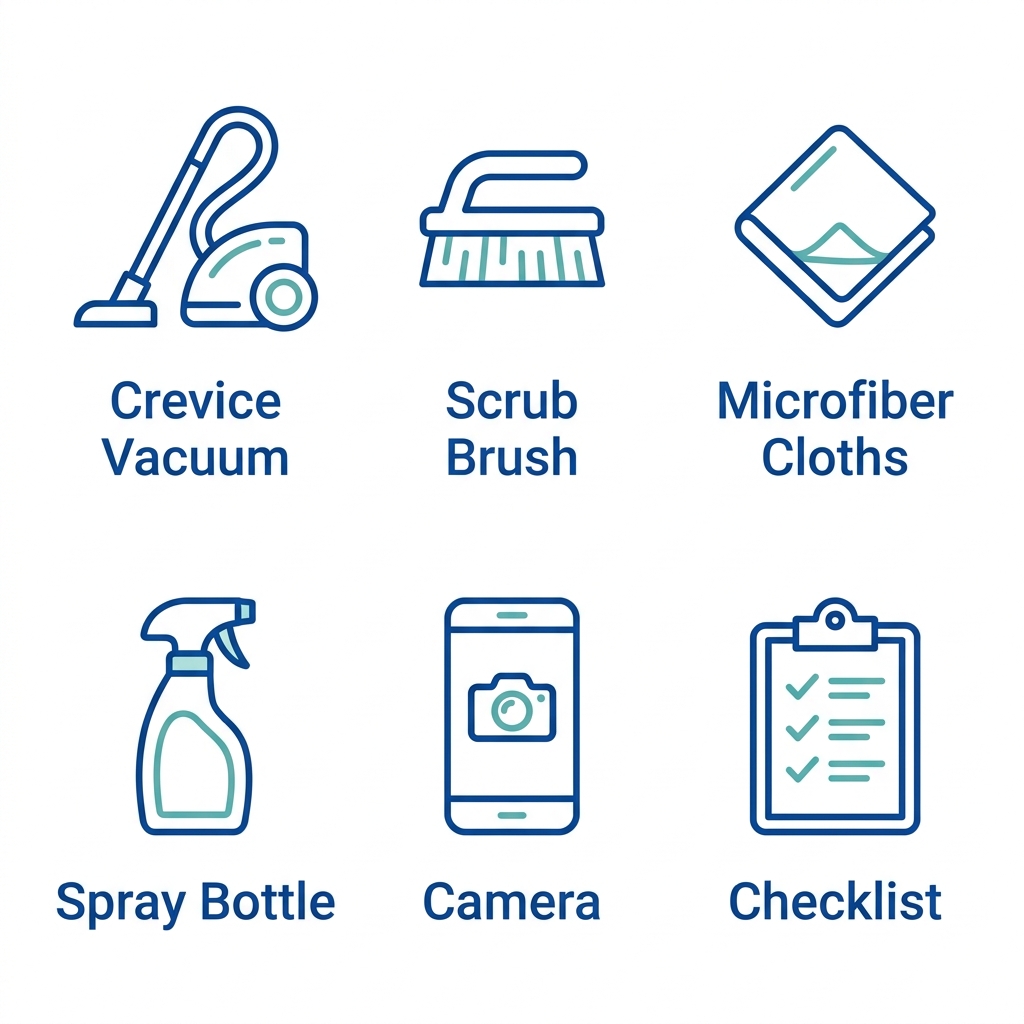
Now that you have your tools ready at hand as well as everything else prepared for work in the workspace, the first task will be to clean up loose soil, dust and other debris on the tracks. Start by vacuuming.
We recommend starting with a vacuum cleaner and a soft brush attachment to gently lift dust, hair, and loose particles from the sill and track. This crucial step prevents scratching when you scrub later. Next, use a small soft-bristle brush, such as an old toothbrush, to dislodge dirt from tight corners and the inner channel of the track. After vacuuming, wipe the sill with a dry microfiber cloth or a disposable tack cloth to capture any remaining fine dust, always working from the top downward and pushing debris outward. This top-down, outward approach keeps already-cleaned sections free of rework. Once all loose debris is removed, the sill and track are ready for thorough cleaning and buildup removal.
Step 2: Clean Window Sills and Remove Buildup
The cleaning process will prevent more dust and debris from sticking to your window sills as it collects over time. Window sill is usually covered in sticky grime caused by mold, mildew, grease and even remnants of old paint and caulking. Vinegar and water work well on light stained areas, while moldy areas must be cleaned with dilute bleach or commercial cleaners. Allowing them to soak for several minutes prior to scrubbing helps to loosen up stubborn buildup. Next, use a soft bristle brush or sponge to start cleaning all surfaces of the window sill, and use a plastic scraper if any residue won't come off. Always avoid using metal objects because these tools can create scratches. Rinse with clean water and wipe down with a microfiber rag when you're done washing. Mold requires special care since this substance isn't safe around humans. Therefore, take some protective gear like rubber gloves, a facemask and eye goggles when working on moldy areas. For heavy build-up on window sill mold, make sure there is lots of room in your workspace before starting. The process doesn't stop at just cleaning your sills. The next step includes cleaning your track so the window opens freely.
Step 3: Vacuum or Brush Out the Tracks
Vacuuming or brushing the window tracks extracts the dust and grit that standard wiping often misses. Start with a vacuum fitted with a crevice attachment, pushing it across from one end of the track to another as it cleans debris off the sides. The small tip will also fit down the corners to extract any dust or grit collected under sliding panels. For caked on dirt, a stiff bristle brush or an old toothbrush loosens stubborn particles before a second pass with the vacuum. Applying moderate pressure may help break up any stuck on gunk. If you don't have a vacuüm, use just your brush to remove the majority of the buildup. Brush the entire length of the track back and forth until all of the gaps between the slides have been cleaned. Sweep the debris out with a dust pan, or drop it right into a bag if there isn't room for a pan. Now the tracks should be ready to receive their next round of treatment.
After loose debris has been removed from the tracks, the surface is primed for a deeper clean. We recommend selecting a solution that is effective yet gentle: warm water mixed with a few drops of mild dish soap works well for most buildup, while a 50/50 blend of white vinegar and water can cut through heavier residue. Using a spray bottle, apply the mixture evenly along the length of the track without creating large puddles that could seep into walls or sills. We suggest working in a well-ventilated area and avoiding corrosive chemicals such as bleach or ammonia, which may damage the track material and pose a health risk. Let the solution dwell for three to five minutes so it can loosen the grime before you begin scrubbing. Once the minutes pass, the softened buildup is ready for the next stage of removal.
When you're facing stubborn dirt in window tracks, it most likely includes packed soil, mold spore fragments and other forms of debris which can't be removed through vacuuming and cloths. Our staff at Art's Cleaning Services uses targeted cleaning products and a specialized cleaning brush specifically used for track maintenance to get rid of this pesky mess. Applying a mixture of baking soda and white vinegar to the track loosens caked-on deposits within five minutes. We then scrub the entire length of the track with a stiff-bristle detail brush, pressing into inside corners and along the outer lip where debris collects out of sight. Afterward, take a wet microfiber cloth and wipe down all the grime that has been scraped off, leaving your tracks clean and free of contaminants. During our thorough clean ups and move-out appointments in the area of Irvine and Orange County, we'll remove each of these things left behind when wiping down your windows, helping to protect the integrity and appearance of your window hardware. Here at Art's Cleaning Services, we like focusing on little tasks such as this in order to ensure a much better-looking window track whenever you choose us.
Step 6: Rinse and Dry the Area
We then rinse the track surfaces with plain water to remove any remaining cleaning solution and loosened grime. Using a damp microfiber cloth or spray bottle filled up with water only, we can use this as a rinsing tool to get rid of any leftover detergent on the track surfaces, avoiding soaking the tracks because excess moisture can damage the frame or drip onto surfaces below. After rinsing, we thoroughly dry every inch of the track, corners, and sills using a dry microfiber cloth or paper towel, wiping until no dampness remains; in our experience this thorough drying step is critical to prevent water spots, mold growth on the frame, and potential rust on metal parts—especially in humid climates like Orange County, California. When rinsing and drying the track, we also need to make sure there are no dirt, dust or residue transferring over to the drying towel; if there is any left over traces of these on the drying towel, the drying work has to start again. Once the area is fully dry, it becomes straightforward to inspect drainage holes and prepare surfaces for lubrication.
Step 7: Check Drainage Holes and Lubricate
Once the track area has been rinsed and dried, locate the small weep holes along the window sill’s outer track. These openings allow rainwater to escape. We clear them with a pipe cleaner, a nylon brush, or compressed air, taking care not to scratch the track. This quick step prevents water pooling that can lead to frame rot or interior leaks.
After confirming the drainage is clear, we condition the track with a dry lubricant. We prefer a silicone-based spray or dry PTFE over oil-based products, which attract dirt. We mist a clean cloth and wipe a thin layer along the track, then remove excess to avoid residue. Slide the window open and closed several times to spread the lubricant; smooth movement confirms even distribution. For safety, we work in a ventilated area, wear gloves, and keep the spray off painted walls. Proper lubrication resolves most minor sticking; if resistance continues, the next section explores deeper fixes.
Troubleshooting Common Window Track Issues
Sometimes even after cleaning out your drainage hole and oiling the roller track, if you notice the window doesn't move as smoothly as it should, it means there’s too much sticky junk stuck in between those metal parts. Usually, what happens here is you get these specks of dirt that clog up in your window's track groove.
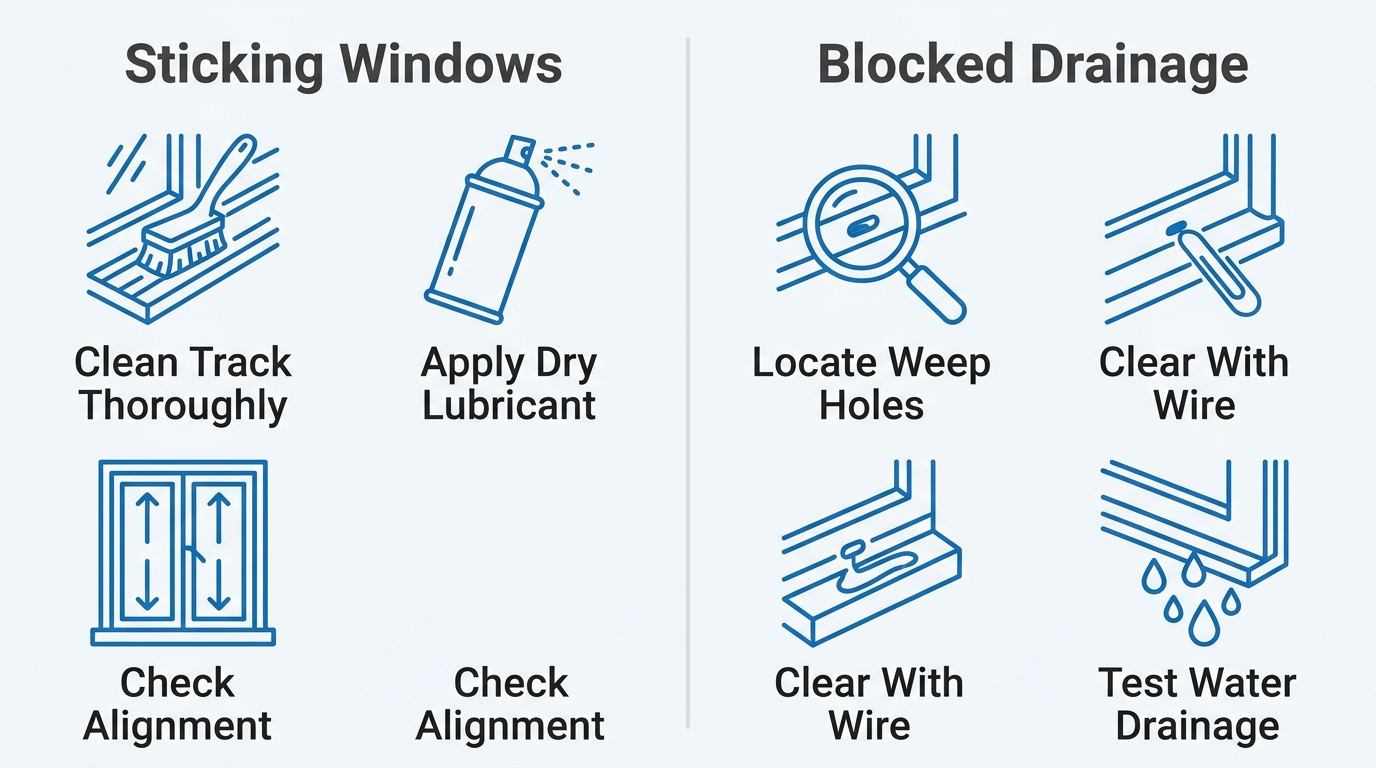
If a window is hard to slide open because it's jammed shut, there might be some compressed debris like dirt or grit stuck down at its base. If a window is rattley when opened, then there are probably bits like little rocks wedged beneath the rollers. If it doesn't move straight and is slightly tilted, then dirt has likely built up on one side, pushing the sash out of alignment.
First, suction the channel with a crevice tool to remove debris, then scrub the grooves with a stiff nylon brush soaked in warm water and degreaser. After scrubbing thoroughly, we'll wash everything down with a microfiber towel and let it sit there for some time until it's totally dried off.
For persistent noise or resistance, apply a dry silicone lubricant after cleaning and avoid oil-based sprays that attract dust. If the sash still drags, check for worn burrs or dents along the aluminum track lip—gentle filing with fine-grit sandpaper can smooth minor imperfections, while deep gouges may require professional attention. We photograph the cleaned tracks before closing the window as deposit-protection evidence, consistent with the 55-point checklist.
Maintaining Clean Windowsills and Tracks Over Time
Regular upkeep of your window tracks and sills prevents long-term buildup that can lead to costly move-out surprises. Knowing how to clean windowsills and tracks is valuable, but a sustained maintenance routine better protects your security deposit. We recommend using our comprehensive 55-point cleaning checklist to give these often-overlooked areas the same attention as visible surfaces. Window tracks collect debris that landlords scrutinize, and missing them can trigger deductions. Documenting the condition with time-stamped photos and keeping your service receipt strengthens your case if a landlord raises concerns. By following the checklist, you can systematically address every overlooked area before the walkthrough. For renters in Irvine, scheduling a move-out cleaning through Art's Cleaning Services guarantees that no detail is missed, and our 100% Satisfaction Guarantee provides peace of mind. Investing a few minutes each month to wipe tracks and sills, supplemented by a professional deep clean when you move, protects your deposit and preserves the apartment’s appearance.
Start Your Window Cleaning Routine
You've now mastered the step-by-step process of cleaning windowsills and tracks, from clearing loose debris to lubricating the tracks. Regular maintenance not only keeps your home looking pristine but also helps prevent mold, improve indoor air quality, and extend the life of your windows. Incorporating this routine into your monthly cleaning schedule can save you time and costly repairs down the line. To ensure you don't miss a spot, use our comprehensive 55-point move-out cleaning checklist—it covers window tracks and much more. For those who prefer a hands-off approach, Art's Cleaning Services offers professional deep cleaning in Irvine, California, backed by a 100% Satisfaction Guarantee. Call us at (949) 536–1970 or visit us at Freeway Technology Park Irvine Spectrum to schedule your service. Your windows—and your home—will thank you.