
Table of Contents
Understanding Hard Water Stains and Their Impact on Your Home
Knowing how to remove hard water stains effectively begins with recognizing that the cloudy white film on your glass and fixtures is mineral residue that dissolves with acidity. A diluted vinegar solution or a commercial descaler can lift the buildup, but the scrubbing tool and technique must suit the material to prevent etching.
These marks can be hard water stains, more commonly known as limescale, which are left behind by mineral-rich tap water that’s high in both calcium and magnesium. When the moisture evaporates from showers, taps and sinks, glass shower doors, bathroom taps, and ceramic tiles are all subject to a build-up of unsightly white, flaky or brown, creating dirty looking surfaces immediately following any clean.
With time, the minerals harden up as thicker, harder layers on chrome, cloudy on windows, and stick in grout lines which means they will be hard to get rid of later. At Art's Cleaning Services, the correct preparation, involving the right types of chemicals and cleaning tools, is what makes hard water stain removal most effective, so we'll walk you through that first.
Before You Begin
Here is what you need to do prior to getting started on how to remove hard water stains. This can help protect your surfaces, make the hard water stain removal process safer and more effective, and prevent accidental damage while improving your results.
Here’s what you need for your cleaning arsenal: white vinegar, baking soda, microfiber cloths, and a soft-bristle brush. Skip abrasive scrubs like steel wool or harsh scouring powder that could damage your glass, tile, or fixture finish. Having all these items easily accessible will help make the job go faster.
Test any cleaning solution on a small, inconspicuous area first. Smear some on a hard-to-spot location at the bottom part of the dirty section you're working on. Wait a few minutes to check for discoloration, etching, or other damage. Do this so as to prevent expensive repairs later on.
Read all the safety instructions that come with each commercial cleaner before you begin using them. Manufacturers tell us how long they need to be left on surfaces, as well as what dilution ratio should be used for each product, and whether or not it will damage certain surfaces. Wear protective gloves when handling cleaning products, especially if your skin is sensitive. Vinegar or other strongly-scented items may irritate some people, so open windows in these areas or turn on an exhaust fan during this step. Always ventilate the room until the last part of the entire process is completed.
Once all supplies have been collected, the surfaces have been tested, and safety measures have been taken care of, you are ready to identify the specific spots where hard water stains have formed and begin treating them.
Step 1: Identify the Sources of Hard Water Stains
Using a torchlight and rubber gloves we will focus on all surfaces where water has left its marks behind. In order to find these areas we conduct a tour around any room which may have exposed water that dried off and deposited the residue onto various surfaces.
- Start in the bathroom—check faucet bases, showerheads, glass doors, and the waterline inside toilet bowls for white, chalky residue.
- Move to the kitchen and laundry area: inspect sink faucets, handles, sprayers, and any countertop edge that gets splashed and dries repeatedly.
- Learn to tell hard water stains apart from soap scum: hard water deposits are crusty and white, while soap scum feels greasy, often mixed with body oils, and tends to be darker.
- Don’t overlook hidden zones like the underside of showerheads, the joints behind faucet handles, and window frames near humid areas.
Once you’ve identified every affected surface, you’ll be ready to pick the right cleaning ingredients for each material.
Step 2: Select the Right Cleaning Ingredients for Hard Water Stains
If you have spotted the stains, the next step is to choose a safe and effective cleaner.
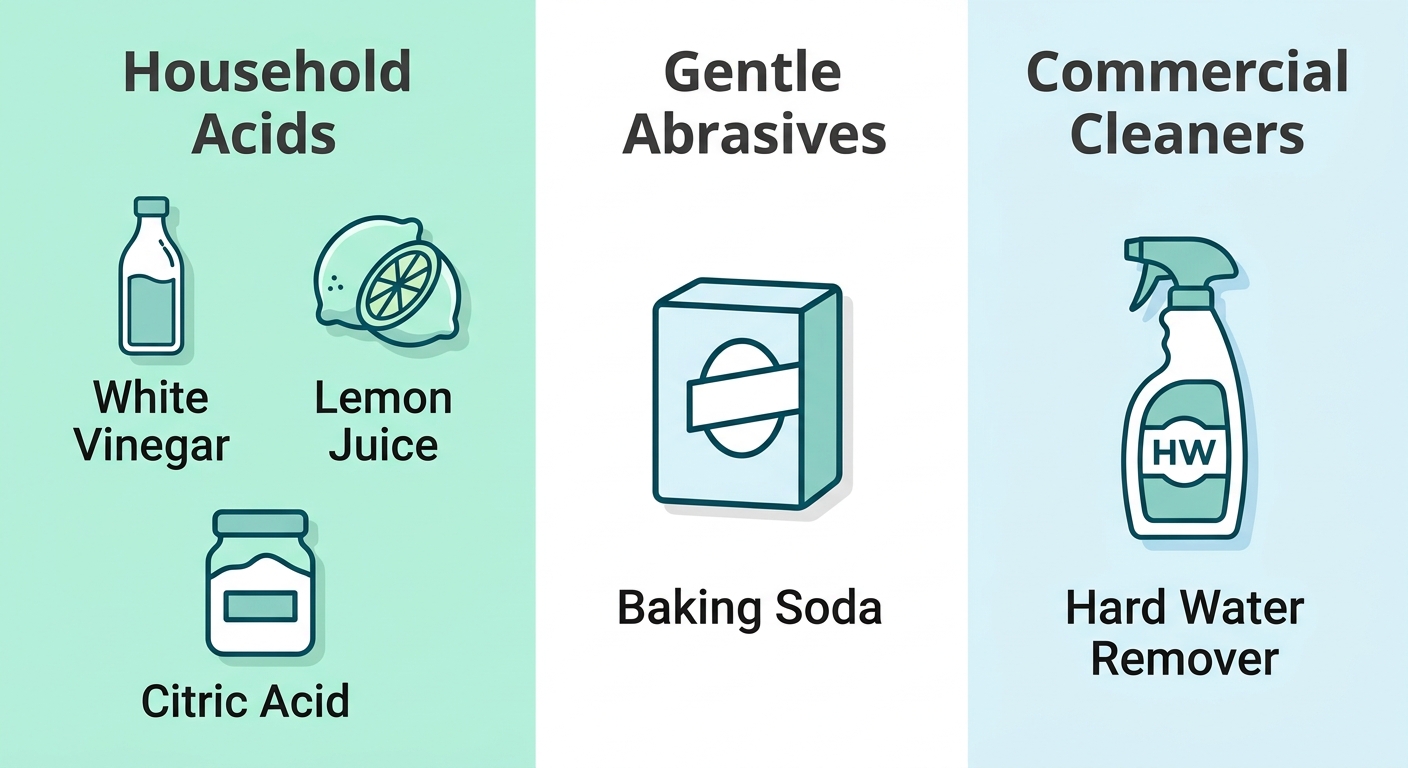
- White vinegar is a mild acid that dissolves calcium and lime deposits.
- Baking soda is a gentle abrasive that scrubs residue from grout, tile, and glass without scratching surfaces.
- Citric acid or lemon juice offers a natural acidic alternative that can reduce light mineral film on shower doors, faucets, and shower heads.
Before putting anything you've got onto the whole surface, first try it on a small hidden spot. And don't make use of something extremely abrasive such as scouring powder, or bleach, on high-gloss surfaces or delicate surfaces.
Once that selected cleaner has been put in place you will be able to begin eliminating all of the pesky grime on glass shower doors.
Once you've got the cleaning agent at hand, apply it generously to the glass surface and leave it for several minutes so the acidity can loosen mineral deposits. Working on glass requires a careful touch; we always recommend a non-abrasive sponge or microfiber cloth to gently scrub in circular motions without risking scratches.
Rinse the door thoroughly with clean water, then dry it immediately with a squeegee to prevent new water spots from forming. For stubborn spots that persist after the first pass, repeat the application or reach for a commercial glass cleaner labeled specifically for hard water stains.
Learning how to remove hard water stains from glass takes a little patience, but a consistent squeegee routine after every shower makes a noticeable difference by reducing future buildup. Once the glass is streak-free, move on to hard water buildup on faucets and other metal fixtures.
Step 4: Eliminate Hard Water Buildup from Faucets and Metal Fixtures
Faucets and metal fixtures can develop white, powdery mineral deposits left behind by hard water, like when you see white streaks on a shower door made out of glass. To remove it, gather white vinegar, lemon juice, baking soda, a soft cloth, and a non-abrasive sponge. We’ve found that gentle household cleaners frequently do the job, though a commercial descaling product is also an option.
- Soak a cloth in undiluted white vinegar and wrap it around the fixture; let it sit for 10–15 minutes.
- For tough mineral buildup, scrub gently with a baking-soda paste and a non-abrasive sponge.
- Rinse with clean water and dry completely with a soft cloth.
- Never use steel wool, scouring pads, or harsh chemicals on chrome, stainless steel, or brass—they can scratch or dull the finish.
After cleaning your plumbing fixture, dry it to prevent new water spots. Hard water buildup can also affect toilet bowls. We'll discuss that in more detail later.
Step 5: Clean Hard Water Stains from Toilet Bowls
In addition to hard water stains on your metal faucets, you might also find these unsightly mineral deposits in your toilet bowl in the form of rings, discolorations etc. So here is how to remove hard water stains from toilet bowls. Start off with making a paste out of white vinegar and baking soda. Apply this on the stained areas present in the toilet bowl and leave it alone for 15 - 20 mins. Scrub away with a toilet brush when you want to clean the stained areas. When you have some particularly dirty spots beneath the water line, dampen a pumice stone and scrub with light pressure to avoid scratching the porcelain finish of the toilet bowl.
If you want to avoid future staining issues, a weekly maintenance flush using a cup of white vinegar will help prevent it. Give it some time (a few hours or overnight) and then start scrubbing away at the stain. Should there be any lingering stains despite your efforts, contact us here at Art's Cleaning Services for deeper cleaning measures. We'll show how to safely remove tough stains from delicate items during our next segment.
Step 6: Safely Clean Hard Water Stains on Delicate Surfaces
Hard water stains can also mar delicate surfaces in your bathroom, demanding a much gentler cleaning approach. Glass shower enclosures, chrome or brushed-nickel fixtures, natural stone tiles such as marble or travertine, and polished porcelain all need special care to avoid etching or dulling.
Always test in a discreet spot before applying your cleaner. If you choose a pH neutral, nonabrasive product and use either a microfibre cloth or a soft sponge, it will lift mineral deposits without scratching. However, stubborn stains often respond to repeated gentle applications rather than hard scrubbing. When dealing with a stain on something made of stone, such as granite, or certain metal finishes, steer away from using products such as bleach or ammonia.
Now that these delicate surfaces have been cleaned and made spot-free, here’s what we’re going to do to keep them looking as good as new.
Step 7: Prevent Hard Water Stains from Forming Again
The moment we have managed to remove the stain, what follows is preventing their recurrence.
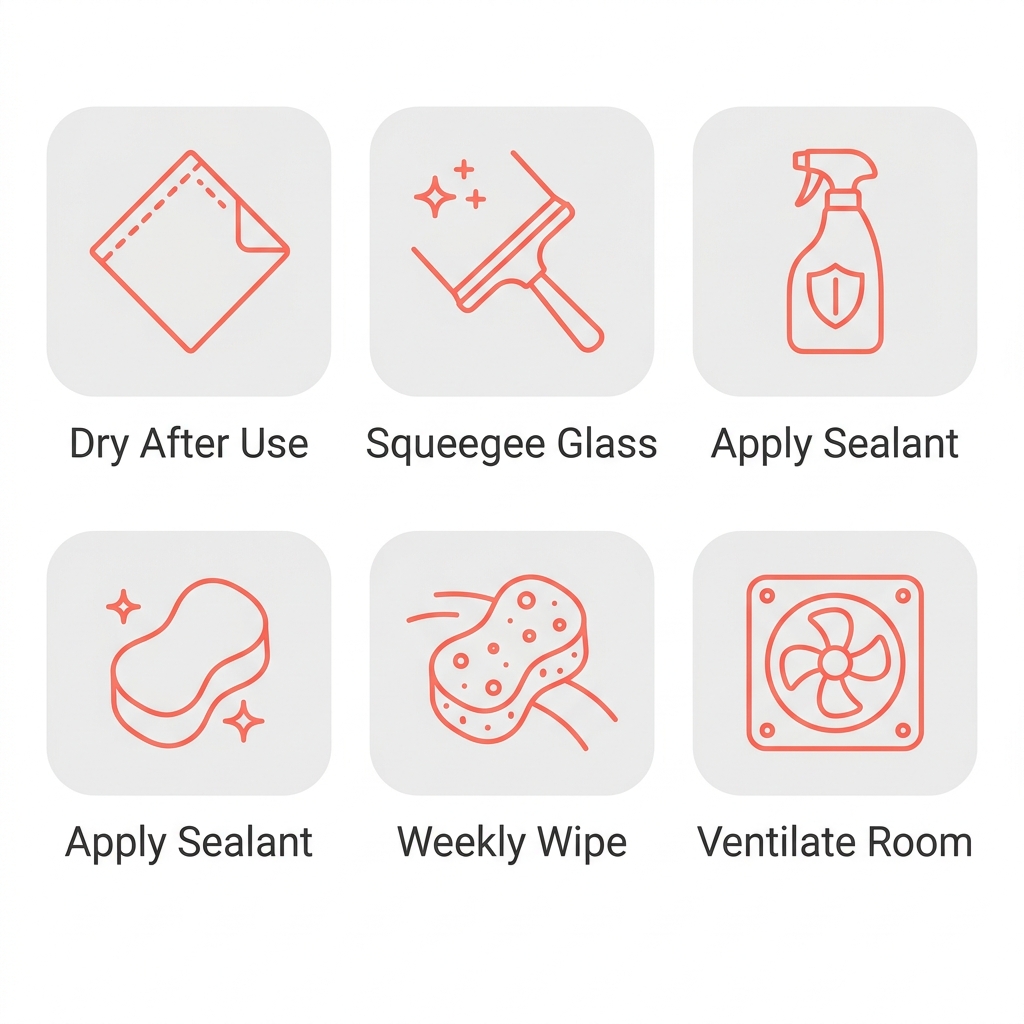
- We recommend drying glass, tile, and metal surfaces with a microfiber cloth after each use; this stops water droplets from leaving mineral deposits.
- Keep a squeegee in the shower and use it on doors and tiles after every shower.
- Apply a glass sealant or water-repellent product to shower doors once they are clean.
- We also recommend a weekly wipe-down with a non-abrasive cleaner on splash-prone surfaces; this prevents light buildup from hardening into stubborn stains between deeper cleanings.
- Improve air flow by running the bathroom fan or leaving the door open after showering.
In case the marks are still there in spite of all your hard work, here are several things you can try.
Troubleshooting Challenges When Removing Hard Water Stains
Hard water marks can reappear on glass shower doors and chrome fixtures even with consistent squeegeeing and wipe-downs, testing a homeowner’s patience.
One frequent issue is a whitish film that forms on the glass after using tap water to clean it. Tap water leaves mineral deposits when it dries that result in a foggy layer being left behind. To resolve this problem you must wash the area off with distilled water then dry it thoroughly with a micro fiber cloth, since distilled water has no minerals in it, no film will develop.
If you want to clean your marble or granite countertops, skip acidic cleaners such as white distilled vinegar or fresh-squeezed lemon juice. Acids will cause marble and granite to react, producing dull etch marks that are permanent. For stone countertops and tiles, stick with a pH-neutral stone cleaner or a hard water remover labeled safe for natural stone. Look for pH-neutral cleansers made especially for natural stones, or hard-water removers specifically formulated safe for natural stone surfaces. Always spot-test these products in out-of-the-way areas before applying them to a countertop.
The chrome fixtures react quickly to a 50/50 solution of white vinegar and water, which you should rinse off within one minute to avoid damaging the finish. Porcelain, enameled and fiberglass tubs and sinks never use steel wool, metal scrubbers, or pumice on them, or they will become scratched permanently. Instead you can apply baking soda in a paste form using water with a non-abrasive sponge. These adjustments often solve the most common hard-water frustrations.
If you have any windows on upper floors or tall glass panels, they pose safety hazards for homeowners, so it’s often best to call in professional cleaning services in Irvine and Orange County. It might be better to hire professionals like Art’s Cleaning Services when cleaning home windows in Orange County and Irvine rather than doing this yourself. When your own attempts still leave behind stubborn hard water marks or you’re concerned about damaging delicate surfaces, our experienced team at Art’s Cleaning Services uses the right tools and surface-safe products to lift marks safely. Our experienced team at Art’s Cleaning Services uses the right tools and surface-safe products to lift marks safely.
Keep Hard Water Stains Away with Professional Help from Art’s Cleaning Services
Tackling hard water stains yourself can be time-consuming and may not always deliver the results you want. While DIY methods can help remove hard water stains, professional cleaning can significantly reduce future buildup. Our team brings professional products and a room-by-room approach to homes and apartments in Irvine and across Orange County. Our 100% satisfaction promise includes a free re-clean if you report any missed areas within 24 hours. As a two-time Nextdoor Neighborhood Fave (2024 and 2025), we focus on clear communication and customized estimates. Pricing and visit length depend on your home’s size, condition, selected service and add-ons; we confirm the scope and estimate before we start. Same-day appointments and preferred team members are subject to availability, and deep-cleaning extras like inside-oven or interior-window care are optional paid add-ons. Call (949) 997-1787 or book online for a free, no-obligation estimate and keep hard water buildup at bay.
Get a Free Estimate Today
After following the DIY steps, you may still face stubborn hard water stains that require professional attention. Our local cleaning team in Irvine, California provides expert house cleaning with specialized tools to tackle those deposits. We offer a free estimate so you know exactly what to expect before we begin. Our team is committed to your satisfaction, with a 24-hour re-clean guarantee if anything is missed. Recognized as a Nextdoor Neighborhood Fave in both 2024 and 2025, we're a trusted local choice. Contact us today to schedule your cleaning and enjoy sparkling surfaces without the hassle.